Every agency says they are a data driven company. They all claim they can build growth engines and that they focus on results. These words do not mean much because every agency says the same thing. Some agencies are genuinely good and will help your business grow. Others will do mediocre work and disappear after a few months. The businesses that are happy with their agency did not choose them because of what they said at first. They chose them because of how they answered some questions. The agency had to answer questions that were not easy to talk about.
Bad agency relationships usually do not fail because of one mistake. They fail because of a lot of things that people ignored when they were talking to the agency at first. This happens when the agency presents a pitch and they want to do things quickly or when it feels uncomfortable to ask tough questions. Here's what you should ask instead, what a good answer should sound like, and what answers should make you stop and reconsider the relationship.
Five Questions That Actually Matter
Skip the generic "tell me about your process" questions. These five get past the pitch and reveal how an agency actually operates.

1. What does onboarding look like in the first 90 days?
A real agency has a process that is written down. They do an audit in the second week. Then they create a strategy. Get approvals. After that they start making things. When someone says "we'll figure it out together once we start", it sounds hones, it's actually a warning sign. This usually means there's no process, behind the work and you will end up learning everything on your own. Ask them to show you what happens each week not just talk about it in general.
2. Will I own my accounts, data, and assets?
Your Google Ads account, your analytics, your website backend, your domain all of it should sit in your name, in writing, from day one. Some agencies build everything under their own accounts, which quietly makes it painful or impossible to leave later without starting from zero, losing months or years of historical data and campaign learning in the process. This is one of the most overlooked questions during the sales process and one of the most consequential once you're a year into the relationship.
3. How much of my retainer goes to actual work versus overhead?
It feels like a rude question to ask directly, so most people never do. Ask it anyway. You're not trying to see their P&L. You're checking whether they're comfortable talking openly about how their business runs. Agencies that get evasive here are often thin-margin operations juggling too many accounts to give any one of them real attention, which usually shows up later as slow turnaround times and generic, templated work rather than anything built specifically for your business.
4. How do you handle AEO/GEO and AI-search visibility?
This is the question that didn't exist a couple of years ago and now separates agencies that are paying attention from ones that aren't. A good answer sounds like specifics: structuring content clearly, building genuine authority, tracking whether you're showing up in AI Overviews and chatbot answers. A red-flag answer sounds like "secret AI ranking hacks" or vague confidence with no substance behind it. There's no shortcut here, and any agency claiming one is selling hype. See our SEO Agency vs In-House vs Freelancer guide for more on why this specific skill set is still inconsistent across providers.
5. What's the contract length, and what's the exit clause?
A 3-6 month initial commitment is reasonable long enough to see real results, short enough to limit your risk if it's not working. Month-to-month after that initial term is the healthiest structure for both sides. Be cautious of any agency insisting on a 12-month lock-in with no performance-based exit clause before they've proven anything, since that structure protects their revenue far more than it protects your results.
The Reporting Question That Filters Out Vanity Metrics
You should receive a monthly report with real numbers: organic traffic, keyword rankings, leads generated, cost-per-lead, and specific actions taken that month not just impressions or follower counts dressed up to look like progress. If an agency can't clearly explain how they measure success before you've even signed, that's not a good sign for after you have. Ask specifically how they'd prove ROI, not just report activity. Good answers reference attribution methodology, not just a graph pointing up and to the right.
Why One Coordinated Team Usually Beats a Specialist
A common and costly mistake is hiring a specialist when the actual growth problem needs multiple channels working together. If your SEO content is attracting traffic but your landing pages aren't converting, an SEO-only provider won't fix that. You'll spend months climbing rankings and watch visitors leave anyway. When SEO, PPC, content, and web development sit under one coordinated team, the data from each channel actually informs the others; a PPC team that doesn't share keyword performance with the SEO team is wasting learning that already exists inside the same account.
This doesn't mean a specialist is always the wrong choice: a business with one clear, narrow problem might genuinely be better served by a focused expert. But if you're not sure exactly which channel is holding you back, that uncertainty itself is usually a sign you need someone who can look across the whole picture rather than optimize one piece of it in isolation.
Green Flags vs Red Flags

A helpful tip when you're in these kinds of discussions: pay attention to how specific people are. Answers that sound confident but general enough to be copied straight from the agency's website are a soft warning sign. Answers that are more detailed and a bit rougher around the edges, covering process, who's responsible, and how they'd handle underperformance, are usually a better sign. Talking badly about companies is another small sign. Agencies that are sure of their own work don't usually spend time during the meeting putting others down.
One More Thing: Meet the Actual Team
Ask to meet the people who'll actually work on your account before you sign, not just the salesperson who ran the pitch. A strong sales pitch and a strong account team are two different things, and the gap between them is where a lot of disappointing agency relationships start: the person who sold you rarely does the day-to-day work. This applies just as much on the web development side see our guide on choosing a web development agency for the same due-diligence approach applied elsewhere.
Conclusion
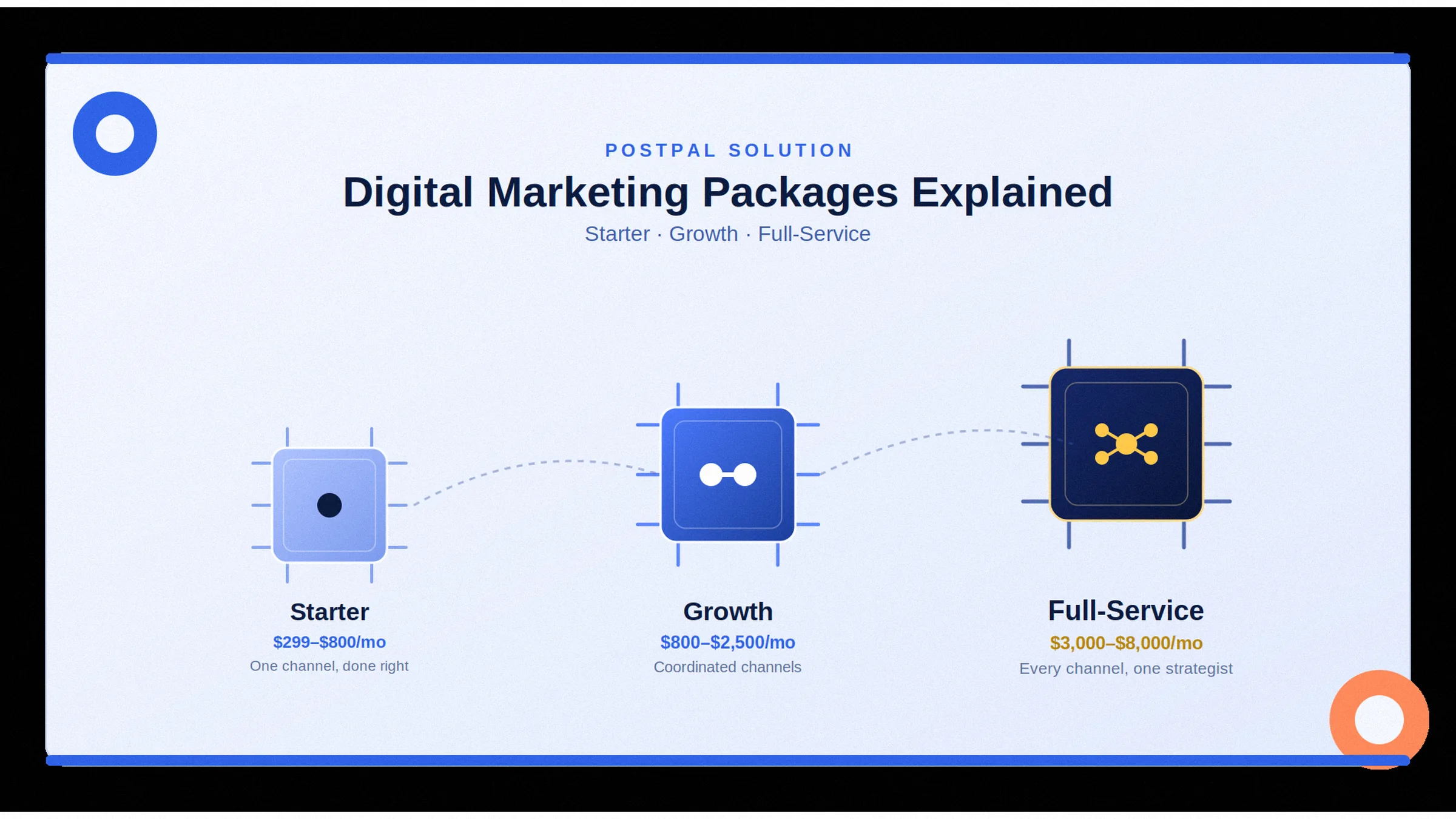
The right agency is not really about the pitch. It is more about how they answer your questions. You need to ask about onboarding, ownership, money, AEO/GEO, and contract terms. Ask them these questions directly. Then pay attention to what they say. Do not just listen to how sure they sound. Listen to what they say and how specific they are with their answers. A little discomfort during the conversation with the vetting process is a cost for avoiding a year-long agreement with the wrong company. If you want to see what a clear and focused answer to these questions actually looks like take a look at PostPal's Digital Marketing & SEO services, or check out the full Digital Marketing & SEO Services guide to learn how to assess pricing and packages alongside these questions.
Disclaimer: This article is for general information and it does not promise that your business will get specific results. The article reflects what people in the industry are doing in 2026 and you should still read your own contract terms with any agency you are working with.
Frequently Asked Questions
What's the single most important question to ask a marketing agency?
How long should a marketing agency contract be?
What's a red flag during the sales process itself?
Should an agency guarantee specific rankings or results?
Why does asking about AEO/GEO matter when choosing an agency now?