Six months before this project began the business seemed okay on paper. Leads were still arriving. The team was still working hard. The monthly income stayed the same for six months. The owner couldn't figure out why. That is usually the time a business most at risk not when things are clearly breaking down but when everyone is working hard and nothing is actually improving.
This is a step-by-step look, at the 90-day plan that came next created as part of a Business Strategy Growth project what changed in each stage and the results that appeared on the side.
The Business Before the Roadmap
The business was a service company with a small sales team, steady inbound leads, and a founder who was still personally involved in most deals. Leads were taking an average of 11 days to get a real response, quotes were closing at 38%, and revenue had been flat for six months despite the team feeling constantly busy.
Nobody on the team could say for certain where the real bottleneck was. Marketing blamed sales. Sales blamed lead quality. The founder suspected pricing but had no data to confirm it. That kind of finger-pointing is usually a sign the business is missing a shared, factual picture of its own operation, not a sign that any one department is actually underperforming.
What made this business a good fit for a roadmap rather, than a single strategy session was the number of moving parts involved. The problem wasn't one decision that could be fixed in an afternoon. It touched lead handling, pricing and internal accountability at once which meant it needed a plan that could be executed and adjusted over weeks not just decided on paper and handed off.
What the 90-Day Roadmap Actually Included
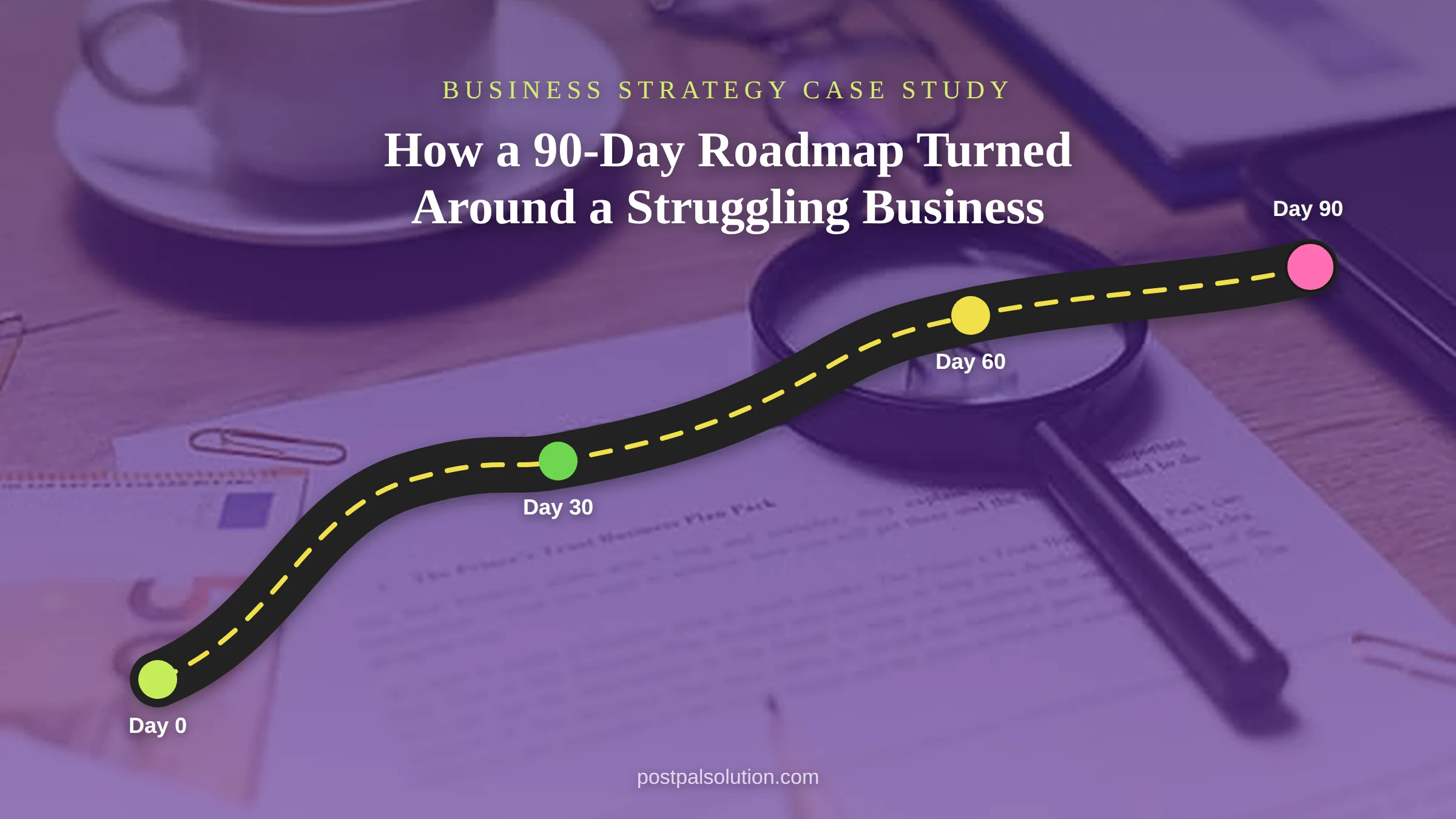
The engagement started with a full audit covering marketing, sales, and operations, not just the marketing funnels most owners assume is the problem. From there the plan was divided into three 30-day phases. Each phase had its goal and its own checkpoint. This allowed progress to be tracked and adjusted as needed. It was not left to be judged at the very end.

Days 1 to 30: Diagnosis and Quick Wins
The first phase was entirely fact‑finding. Every lead source was audited back to its origin. Staff were interviewed one by one about where they felt work was getting stuck. The team also mapped where money was leaking between the first contact and the closed deal. The important discovery was that more than a third of leads were left untouched for, over a week simply because no one owned the follow‑up step.
Days 31 to 60: Execution and Course Correction
With the bottleneck identified, phase two focused on fixing it. A same-day follow-up process replaced the old ad hoc system, services got repriced against actual margin data instead of guesswork, and every weekly metric got a named owner instead of being everyone's job and no one's responsibility. The day 60 checkpoint showed lead response time already down to under two days, well ahead of schedule.
Days 61 to 90: Measuring and Locking in Gains
The final phase was, about protecting the gains not chasing ones. The team doubled down on whatever was working ran short training sessions so the new follow‑up process would survive staff turnover and set a 90‑day repeat review cadence so the business wouldn’t quietly drift back into its old habits six months later.
The Results After 90 Days
By day 90, the numbers had moved further than almost anyone on the team expected going in:
|
Metric |
Before (Day 0) |
After (Day 90) |
|
Average lead response time |
11 days |
1 day |
|
Quote-to-close rate |
38% |
57% |
|
Monthly revenue trend |
Flat for 6 months |
+26% quarter over quarter |

What Made the Difference
Three things stand out when I look back at this engagement. First the diagnosis phase was not. Rushed, which meant the fix focused on the real problem instead of the obvious guess. Second the 30-day checkpoints identified progress enough to make changes instead of waiting 90 days to find out something was not working. Third ownership was given to people for specific metrics, which is often the single biggest difference, between a plan that gets done and one that quietly disappears in a shared document.
It's worth naming what didn't drive the turnaround, too. There was no new marketing channel, no rebrand, and no major new hire in the first 90 days. Revenue growth came entirely from converting the leads that the business was already generating at a rate that the business was already paying for. That is a pattern. The fastest fix is often inside the business not, in some tactic that looks appealing from the outside.
Could This Work for Your Business?
Not every business requires a 90-day engagement. A business that has one clear and specific decision to make is often better off with a single focused session rather, than a long-term multi-phase roadmap. The signal to look for is complexity, not just size: if the stuck problem touches more than one part of the business at once, marketing and sales and pricing all tangled together, that's usually when a structured roadmap earns its cost over a single conversation.
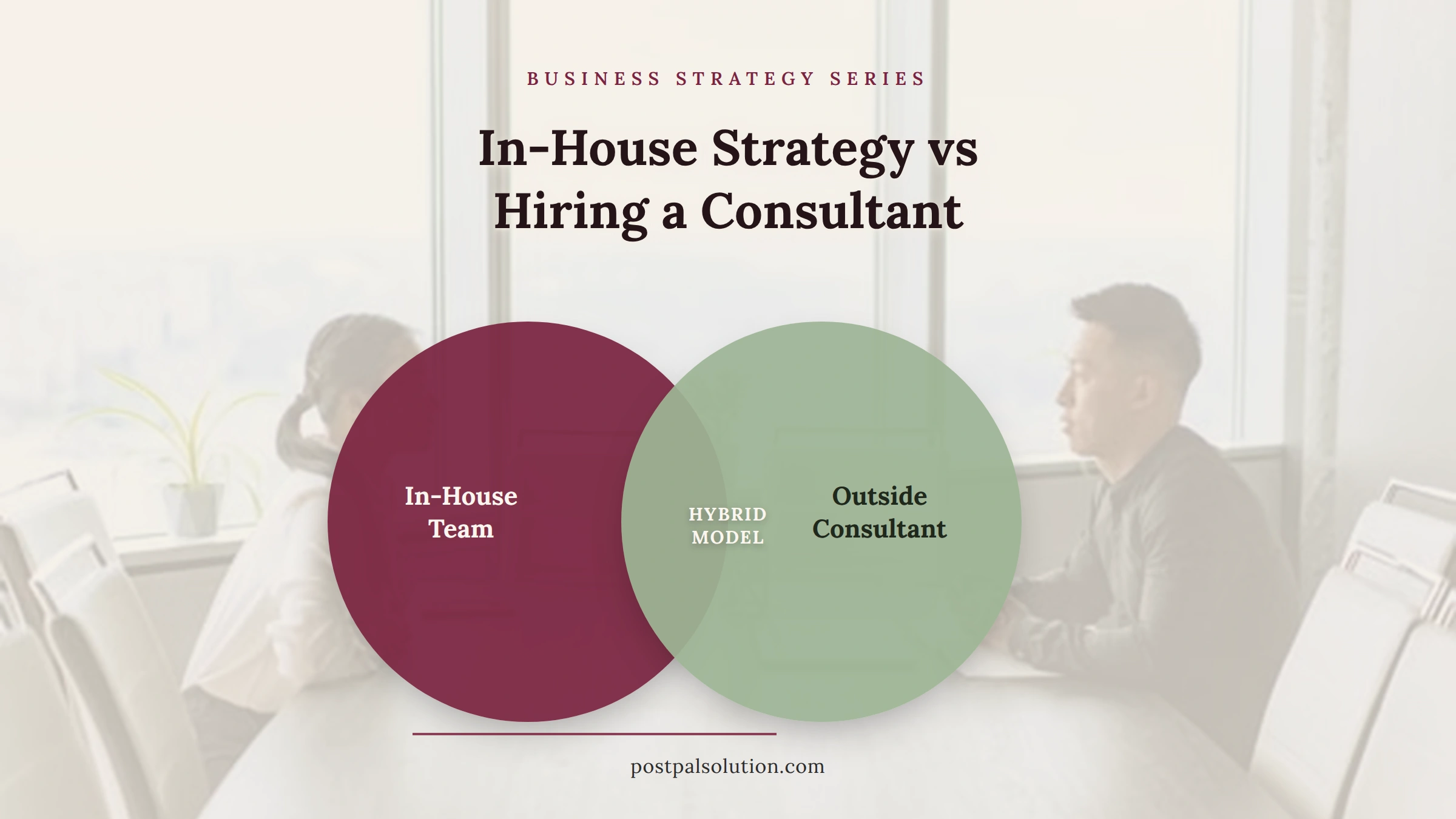
If you're still deciding between a single session and something more structured, our guide on in-house strategy vs hiring a consultant walks through how to tell which one fits. If a stalled number in your own business sounds familiar, though, a structured roadmap like this one is usually the faster path out.
Conclusion
The change here didn't happen because of one idea. It happened because we spent the 30 days really looking for the real problem instead of just thinking about it then we made the solution have enough structure and someone responsible so it would last. This way finds the problem first then do the work with checkups, along the way. Finally make sure the good results stay can be used again by most small businesses that are stuck in the same place.
Disclaimer
This case study shows a mix of client experiences. Results are not guaranteed for every business. It’s shared to help you understand outcomes not to promise them. Your business is unique so always speak with an advisor before making big decisions, about strategy or finances.
Frequently Asked Questions
Is this a real client or a composite case study?
What kind of business does a 90-day roadmap work best for?
How is a 90-day roadmap different from a one-time strategy session?
What if the business doesn't hit its 90-day targets?
Do we need to pause daily operations to follow a roadmap like this?
How much does a 90-day roadmap engagement cost?