Almost no business owner decides on purpose to run without a strategy. It happens by default, one postponed planning session at a time, until a year has gone by and nobody can quite explain what the business was actually working toward.
The odd part is that skipping strategy rarely feels like a mistake while it's happening. It feels like staying busy. This article looks at why that pattern is so common, what it quietly costs, and the small signs that tell you it's already happening in your business.
If you haven't read it yet, our guide on what's included in a business strategy engagement is a good next stop once you're ready to fix it.
Why Strategy Gets Skipped in the First Place
Strategy loses out to daily operations for a simple reason: operations have deadlines and strategy doesn't. Payroll is due Friday. A strategy session isn't due anything, so it keeps sliding to next month, then next quarter.
There's also a confidence problem. A lot of owners assume strategic planning means a thick document full of frameworks they don't have time to learn. In reality, a working plan can fit on one page and take an afternoon to build. The size of the fear is usually bigger than the size of the task.
Then there's the team dynamic. In a lot of small businesses, one person is quietly expected to have the whole strategy figured out in their head, usually the founder. Everyone else just waits for direction. That setup works fine while the business is small and the founder has bandwidth. It stops working the moment the business gets busy enough that nobody has time to step back, and by then the habit of not planning is already baked in.
The "We'll Get to It Later" Trap
Postponing strategy doesn't pause the business. Decisions still get made every day, pricing, hiring, what to build next, they just get made without anything to check them against. Each individual call might be reasonable. Stacked over months, they start pulling the business in different directions at once.
This is the trap: nothing, about not having a plan seems like a problem now. It comes up later as progress a team that feels busy but not focused or a founder who can't explain why sales have stopped growing even though everyone is working hard.
What Skipping Strategy Actually Costs You
The cost rarely shows up as one big number. It shows up as a series of smaller ones that compound quietly:
|
Skipped Step |
What It Tends to Cost |
|
No written goals |
Every hire, campaign, and purchase gets judged by gut feel instead of a shared target |
|
No market check |
Money spent chasing customers who already moved on to a competitor |
|
No pricing review |
Margins quietly shrink while costs keep rising around them |
|
No annual roadmap |
Team spends the year reacting instead of building toward anything specific |
|
No outside input |
Same blind spot gets missed year after year because nobody's positioned to see it |

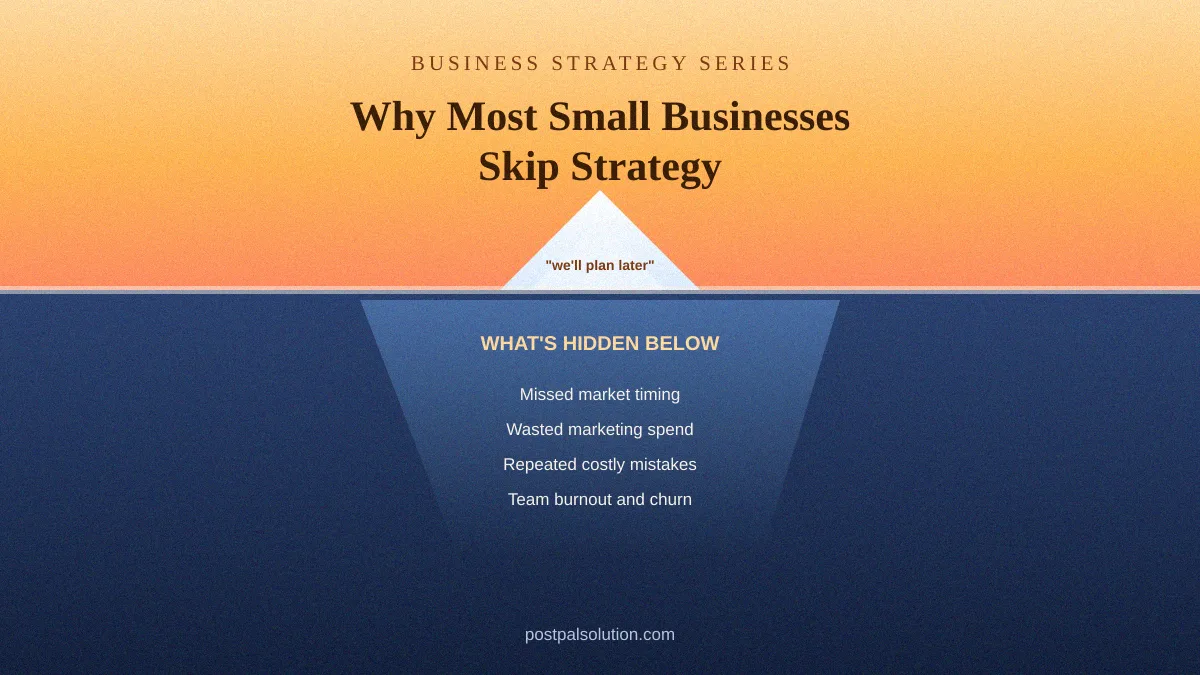
The Iceberg Effect: Why the Real Cost Stays Hidden
Skipping a planning session looks small, from the outside. It looks like one planning session that did not happen. However, a larger problem sits underneath that decision. The larger problem is the missed timing, the wasted spend and the mistakes that keep repeating because no one stepped back to notice the pattern.
That's the part most owner’s underestimate. The visible cost is tiny. The hidden cost is what actually erodes the business over a year, and by the time it surfaces, it's usually tangled up with three or four other problems that all trace back to the same missing plan.
Small Signs You've Been Skipping Strategy
A few reliable tells, drawn from patterns we see across client businesses:
- Meetings keep revisiting the same unresolved question without landing on an answer.
- Marketing and sales are technically both working, just not toward the same goal.
- Nobody can state this quarter's top priority in one sentence.
- Growth has plateaued and the explanations all sound like guesses.
One or two of these on their own aren't alarming. Three or more together usually mean the business has been running on instinct for longer than it should.
How to Start Without Overhauling Everything
You don't need to change everything in the company to fix this. Start with the one decision that has been stuck the longest a question about pricing, a choice about hiring a product idea that is not moving forward and create a clear plan, around that one thing. Getting one decision made often helps make the next one easier.
It also helps to set a deadline on the decision, even a very small deadline. Pick a date two weeks from now. Commit to walking away from that single decision with an answer, written down not just discussed. The point is not to make the decision, on the first try; it is to break the cycle where the same question quietly reappears every few months without ever getting resolved.

How PostPal Helps You Skip the Skipping
PostPal's business strategy services exist for exactly this moment, when a business knows it's overdue for a real plan but doesn't want to lose a month to building one. The Business Strategy Basic package tackles a single stuck decision in one focused session. The Business Strategy Growth package builds a broader roadmap for businesses ready to plan further ahead. You can look at both options. All the prices, on our pricing page, or begin with our guide about how much a business strategy session costs in 2026. If you are still thinking about whether to make the investment.
Conclusion
Skipping strategy rarely feels like a choice, which's exactly why it's so easy to keep doing it. The cost isn't in the missed meeting itself it's, in everything that happens underneath it for months. The fix doesn't have to be big. One focused session, aimed at the decision that has been stuck the longest is usually enough to stop the drifting and get the business moving on purpose again.
Disclaimer: This article is, for informational purposes and should not be treated as formal business, financial or legal advice. Disclaimer: Every business situation is different so talk to an advisor or consultant before making major strategic or financial decisions.
Frequently Asked Questions
Why do small businesses skip strategic planning in the first place?
How much does skipping strategy actually cost a small business?
Is a strategic plan only useful for larger companies?
What's the fastest way to start if we've never had a strategy?
Can strategy work be done without hiring outside help?
How do I know if skipping strategy is actually hurting us?