Picking a consultant is very similar, to picking a contractor for your home. You are giving someone a decision you can't completely see their work before its done and everyone you speak with seems sure of themselves. The difference is that a contractor results in a wall that is not straight. A bad strategy consultant can result in three months of wasted time and a plan that no one follows.
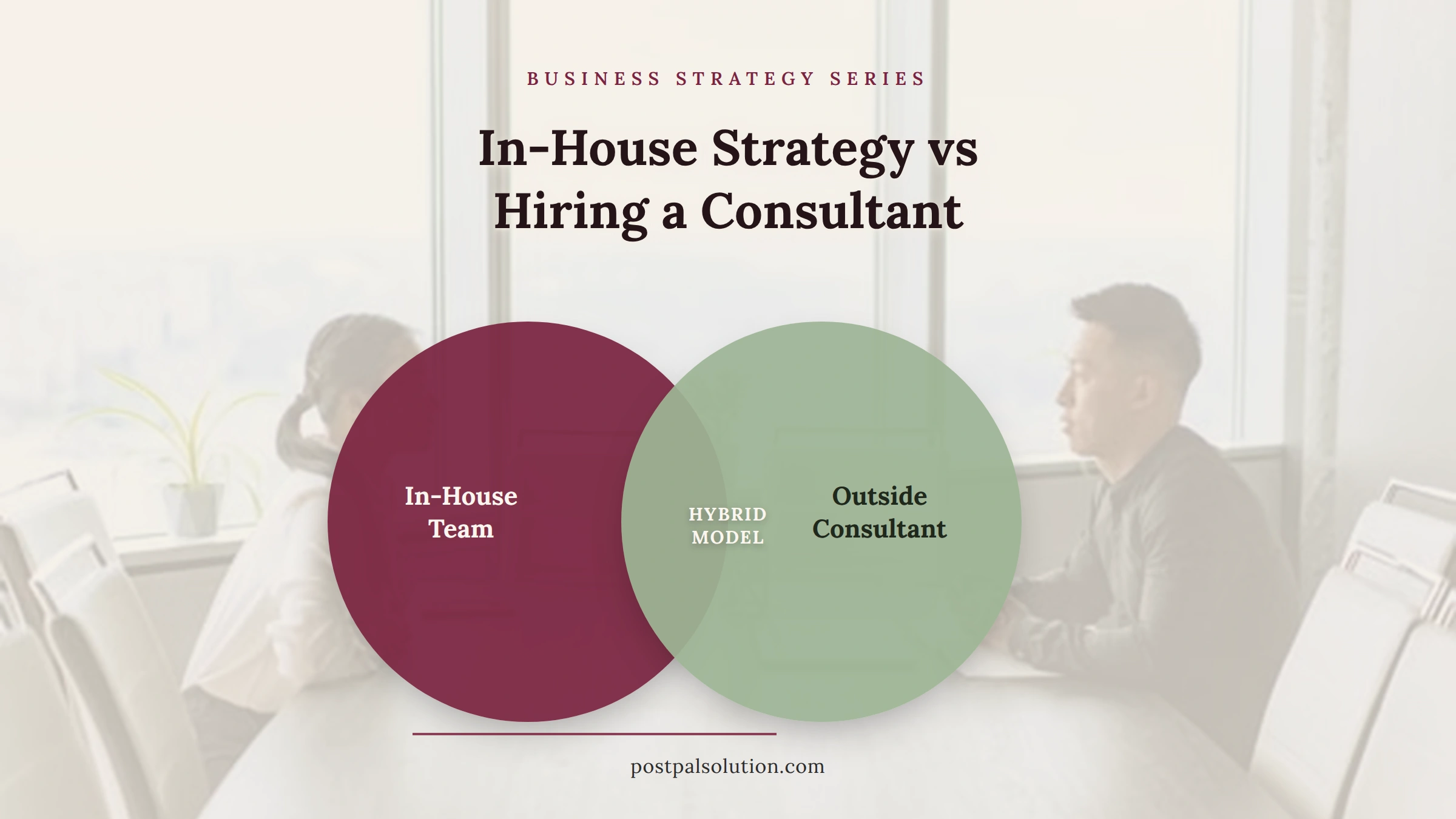
The positive thing is that making a choice doesn't require special skills. It requires a proper question and a desire to pay attention when answers are not clear. If you are still thinking about whether to bring someone in all our guide about in-house strategy vs hiring a consultant is worth a quick look first.
Start With the Problem, Not the Person
Most people start by looking for consultants. It is better to start by writing down what you really need to fix. Not "we need a strategy " but something clear: our leads stop coming our prices seem wrong we don't know if we should open another place.
A clear problem does two things. It lets you quickly find out if a consultant has handled problem before and it stops you from paying for a review when all you needed was an answer, to one problem. I know that deciding what problem to ask about can feel hard. If you cannot name problem yet that is fine. Say so. Look for someone who offers a short discovery conversation to help you define problem.
Look for Relevant Experience, Not Impressive Credentials
A long list of titles and logos looks good on a website, but it tells you very little about whether someone can help a business like yours. A person who has mainly worked with companies might offer advice that is correct in theory but not helpful for a small team of ten people.
Ask what types of businesses they normally work with and what the recent problem they fixed was, like. You are looking for details: the size of the business the situation, what happened after the problem was solved. General answers are a sign the experience may not be as close to yours as it sounds.
Ask How the Work Actually Runs
Two consultants can charge the same fee and deliver completely different experiences. One hands you a slide deck after a single call. Another works with you across several sessions and leaves a plan your team can act on. You won't know which you're getting unless you ask.
- Find out how many sessions are included.
- Find out what you will receive at the end.
- Find out how time it will take for you.
- Find out what happens if you have questions afterward.
The consultant can explain all of this in language without hesitation.

Questions Worth Asking Before You Sign
When we talk, I do not want an interview. A short list covers most of what matters:
- What types of business problems do you usually solve and could you share an example from the past?
- What will I have in my hands at the end of the engagement?
- How do you decide what to prioritize when there is more to fix than time allows?
- What do you need from me and my team. How much time will it take?
- How do you measure whether the work actually helped?
Pay attention to how they answer as much as what they say. Clear, direct answers with real examples are a good sign. Long answers that never quite land on the question usually aren't.
Green Flags and Red Flags at a Glance
Once you've spoken with a candidate comparing them makes it easier to spot patterns that could go unnoticed when you're just talking to one person at a time.
|
What to check |
Green flag |
Red flag |
|
Experience |
Can describe work with businesses like yours |
Only vague or name-dropped credentials |
|
Process |
Explains how the engagement runs, step by step |
Says 'it depends' and stops there |
|
Pricing |
Scope and price written down before you sign |
Price shifts once the work has started |
|
Results |
Talks about trade-offs and realistic outcomes |
Guarantees revenue or rankings |
|
References |
Happy to connect you with past clients |
Dodges or delays the question |
No single flag decides it. But if you see two or three red ones in the same conversation, trust that. It's much easier to walk away before signing than after.
Be Careful with Guarantees and Vague Pricing
Nobody can honestly promise a specific revenue number or search ranking as a result of strategy work. Many things, outside the consultants control influence the result. When someone promises an outcome, they are often trying to sell confidence, not a real plan.
Pricing deserves the attention. You should understand what you are paying for before work starts: how many sessions what things will be. If follow-up is part of the deal. If the cost only becomes clear after you are committed that is a reason to stop. For a sense of what fair ranges look like, our breakdown of what a business strategy session costs in 2026 is a useful reference point.
A Simple Way to Compare Two or Three Candidates
After each conversation ask yourself these four questions before the moment passes:
- How well did they understand my problem?
- How clearly did they explain their process?
- What all is included? Did I feel listened to?
Doing this for every candidate keeps you from choosing the person of the fit.
That last one matters more than it sounds. Strategy work involves being honest about what isn't working. If you don't feel comfortable saying that out loud to someone, the engagement is unlikely to go as deep as it needs to.

Start Small Before You Commit Big
You don't need to sign a contract to see if someone is the right person for the job. A single focused meeting or a short first task gives you an idea of how they work how they talk and whether their suggestions are helpful, to you. If everything works out you can keep working. If it doesn't you only spent an afternoon of a whole quarter.
This is also why the size of the first commitment is worth paying attention to. A consultant who insists on a long retainer before you've seen any work is asking you to take most of the risk.
How PostPal Approaches It
We built our business strategy services around exactly this idea. Business Strategy Basic is a focused session for one clear decision, and Business Strategy Growth goes further for businesses that need a fuller roadmap. Scope and price are laid out on our pricing page before you commit to anything, and our guide on what's included in a business strategy engagement shows what you'd receive at each level.
If you'd like the bigger picture first, our complete guide to business strategy services covers how the whole process fits together.
Conclusion
Choosing a consultant well comes down to a habit. First define the problem clearly. Then look for experience that matches your situation exactly. Ask how the work actually runs day to day. Make sure the scope and price are written down. Start with something. That way if the choice isn't right the cost is low. Most of the risk, in hiring a consultant disappears once you know what you're asking for.
Disclaimer:
This article is meant to provide information and should not be considered as official business, financial or legal guidance. Each business has its unique circumstances so it's important to speak with a professional advisor before taking major steps in strategy or finance such, as hiring a consultant.
Frequently Asked Questions
How do I know if a consultant is the right fit for a small business?
What should I ask a strategy consultant in the first call?
Is a cheaper consultant a bad sign?
Should I ask a consultant for references or past results?
How long should a strategy consultant's first engagement be?
What's the biggest mistake people make when hiring a consultant?