A plan usually does not fail at once. A plan wears down slowly one postponed decision after another one repeated argument, after another. Over time the business keeps running on a strategy that technically still exists. It hasn't matched reality in a year. Nobody announces the moment it stopped working. You just notice, eventually that something feels off. You can't quite say when it started.
The tricky part is that most of these signs look like ordinary busyness from the inside. A slow quarter looks like a slow quarter. A tense meeting looks like two people having an off day. It's only when you line several of them up side by side that the real pattern shows itself. Here are five worth taking seriously, because on their own they're annoying, but together they usually mean the plan itself needs rework, not just more effort from the team.
1. The Same Decision Keeps Coming Back
If your team has debated the same question in three separate meetings this year, pricing, hiring, which market to chase, that's not indecision. It's a sign there's no shared plan to settle it. A real strategy gives people something to point back to. Without one, every meeting starts the argument over from zero.
You can usually spot this by how a meeting end. If a topic keeps getting pushed to the month with the phrase "lets revisit this " that's a sign. A real decision doesn't need to be revisited. It needs to be acted on. When a decision keeps coming up again it means it wasn't really decided in the first place. It was just delayed with an excuse.
2. Growth Has Flattened Even Though Everyone's Working Harder
This is the one that frustrates owners most, because it feels unfair. The team is putting in real effort, and the revenue line barely moves. Usually what's happened is the approach that got the business to its current size has quietly hit its ceiling, and nobody's stepped back long enough to notice that more effort on the same approach isn't the fix.

3. Marketing and Sales Are Quietly at War
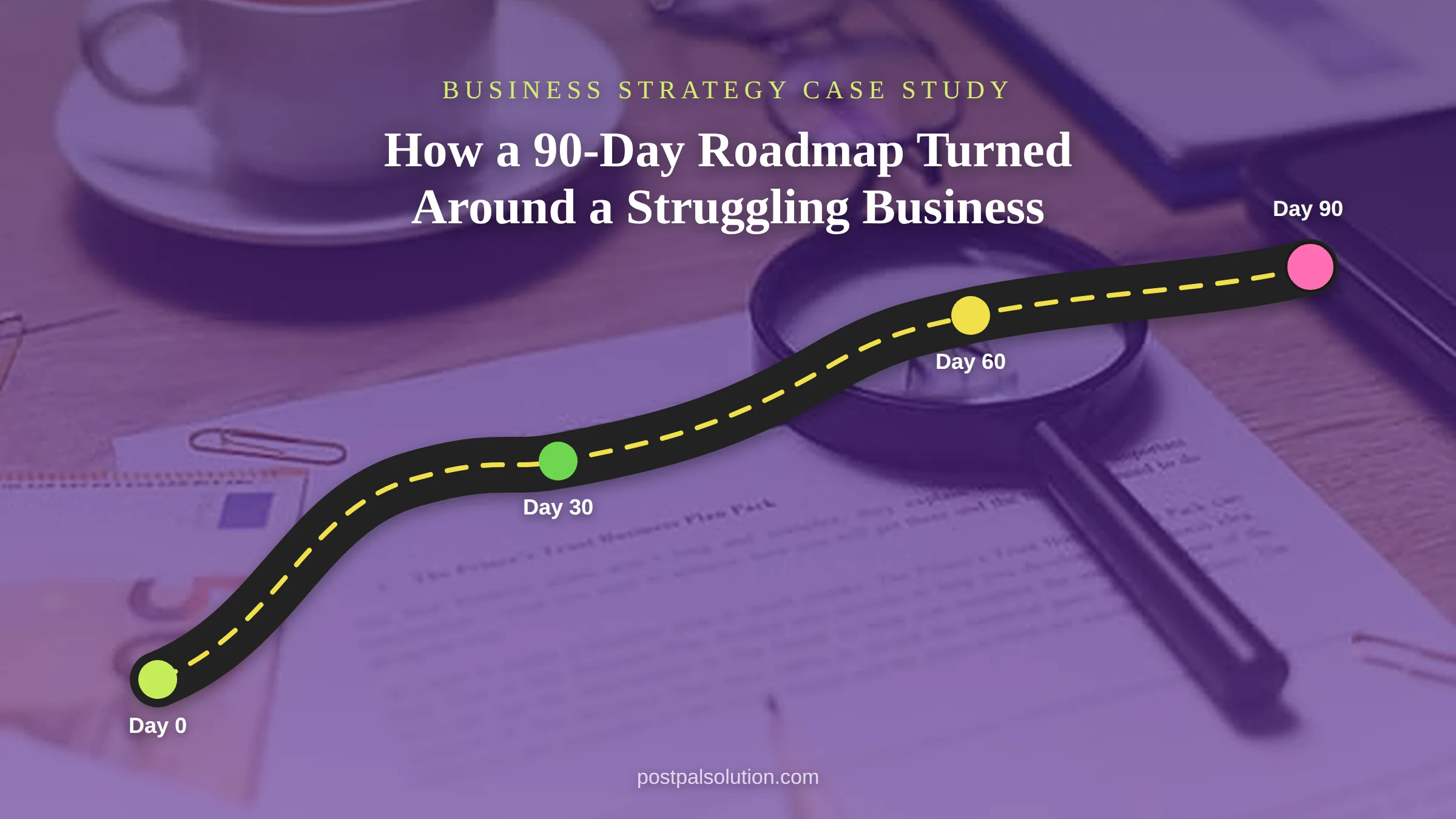
Marketing says the leads are good and sales isn't closing them. Sales says the leads are garbage. Both might be a little right, which is exactly the problem: nobody owns the handoff between the two teams, so blame fills the gap where a process should be. This is one of the clearest tells that strategy, not effort, is the missing piece, and it's a pattern we walked through in detail in our 90-day roadmap case study.
4. Nobody Can Tell You Who Owns the Numbers
Metrics get pulled together for a report looked over quickly and then nothing ever changes. That’s a sign the numbers don’t really belong to anyone. A real working strategy ties metrics, to specific people. So, when conversion rates drop or retention slips there’s someone whose job it's to see it and act, not just to report it.
Try this test: pick any number from months report and ask who's responsible, for improving it. If the honest answer is "everyone" or a long pause, that metric doesn't have an owner. A spreadsheet full of numbers nobody's accountable for isn't a strategy, it's just a record of things that happened.
5. Every Day Feels Like Putting Out Fires
A business running on a solid strategy still has bad days, but most of the team's time goes toward planned priorities. When the opposite is true, when everyone's always reacting and nothing planned ever quite gets to the top of the list, that's usually not a time management problem. It's what happens when there's no filter for deciding what actually matters this week.
The giveaway is what happens to the calendar. Planned work keeps getting pushed for whatever is loudest on any given day. The loudest thing is almost never the most important thing. Teams stuck in this pattern often say they are busy and productive, at the time. They don’t realize those two words have slowly stopped meaning the same thing.

What These Signs Add Up To
Looking at any one of these in isolation, it's easy to explain away. A rough quarter, a personality clash, a slow month. The pattern only becomes obvious when you see two or three of them at once, which is why laying them out side by side tends to be more useful than brooding over each one separately. Most owners we've talked to can spot one or two of these the moment they read the list. Fewer realize how many of the other four are quietly happening alongside it.
|
Sign |
What It Looks Like |
What It's Really Telling You |
|
Decisions keep returning |
The same question comes up in three meetings |
There's no agreed plan to point back to |
|
Growth has flattened |
Revenue holds steady despite more effort |
The current approach has hit its ceiling |
|
Departments pull apart |
Marketing and sales blame each other |
Nobody owns the handoff between them |
|
Nobody owns the numbers |
Metrics get reported, not acted on |
Accountability was never assigned |
|
Everything feels urgent |
The team is always reacting |
There's no filter for what matters most |
Catching It Early Is Cheaper Than Catching It Late
None of these signs mean the business is failing. They mean the plan that got you here has stopped being the plan that gets you further. The earlier that gets addressed, the smaller the fix tends to be. Left alone for another year, the same issue usually costs more to untangle, which is exactly the pattern in our piece on why most small businesses skip strategy and what that delay actually costs.
If two or more of these signs sound familiar, a structured reset is worth considering. Our Business Strategy Growth package is built for exactly this kind of multi-part problem, and the full scope and pricing are laid out on our pricing page before you commit to anything.
Conclusion
A strategy overhaul isn't a sign of failure. It's what happens when a business has grown past the plan that built it, which is a good problem to have if you catch it. Watch for the signs stacking up together rather than waiting for one dramatic moment, because that moment usually doesn't come. The slow version is far more common, and far easier to fix early.
Disclaimer
This article is meant to provide information only. It should not be considered business, financial or legal advice. Every business has its unique situation. So, it's important to speak with an advisor before making any decisions, about changing your strategy.
Frequently Asked Questions
How many of these signs mean I actually need an overhaul?
Can a strategy overhaul happen without pausing daily operations?
Is a strategy overhaul the same as starting from scratch?
What is the difference between a strategy overhaul and a single session?
How do I bring this up with a team that doesn't think anything's wrong?